AI Tools for Research

A PhD student’s RETEX after two years with AI agents

Louis Libat

Multiscale Modeling and Simulation Laboratory (MSME), Gustave Eiffel University, Champs-sur-Marne, France

2026-06-18

A short introduction

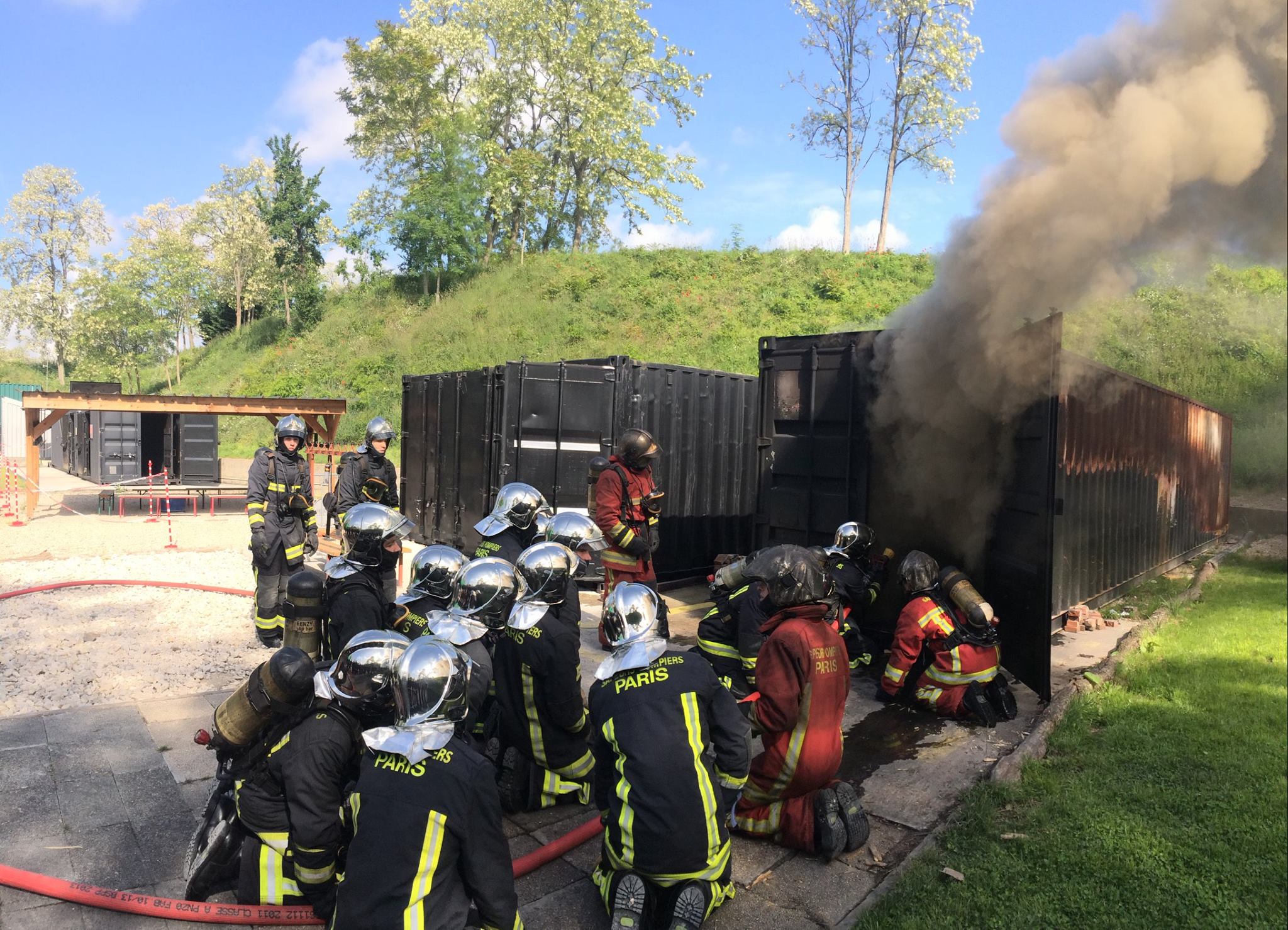
Paris Fire Brigade vehicle

Why I became interested

2023 – internship with the Paris Fire Brigade
2024–today – regular use in my PhD work

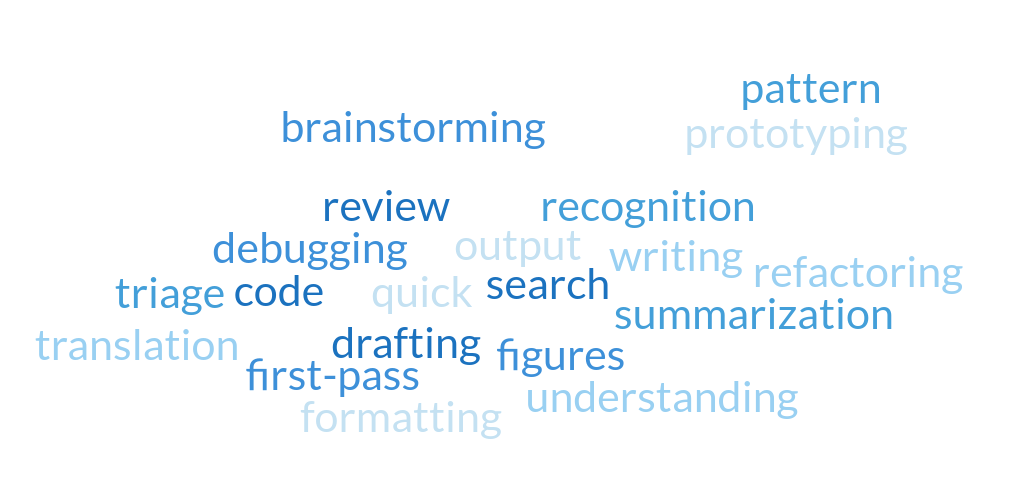
literature code debugging writing slides
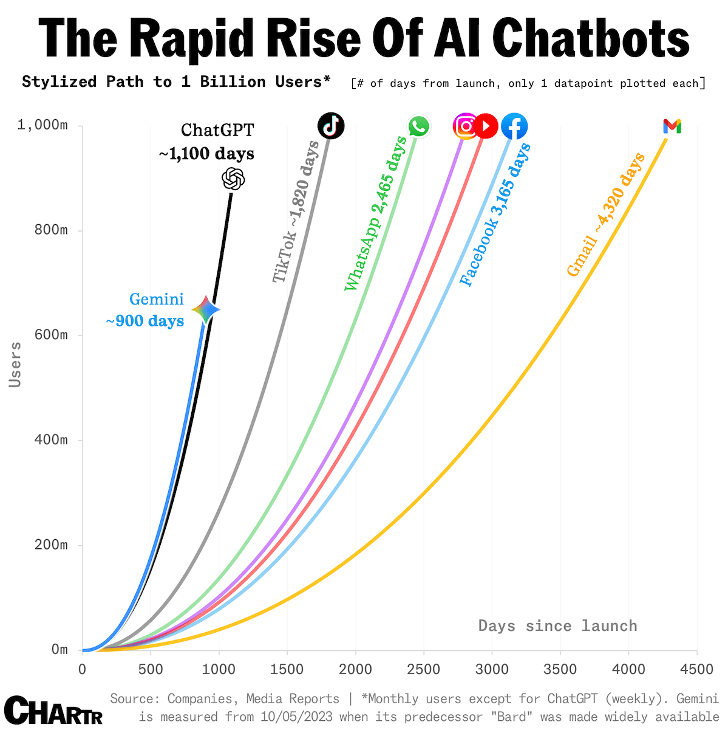
Rise of interest in conversational AI tools

Why I kept using them

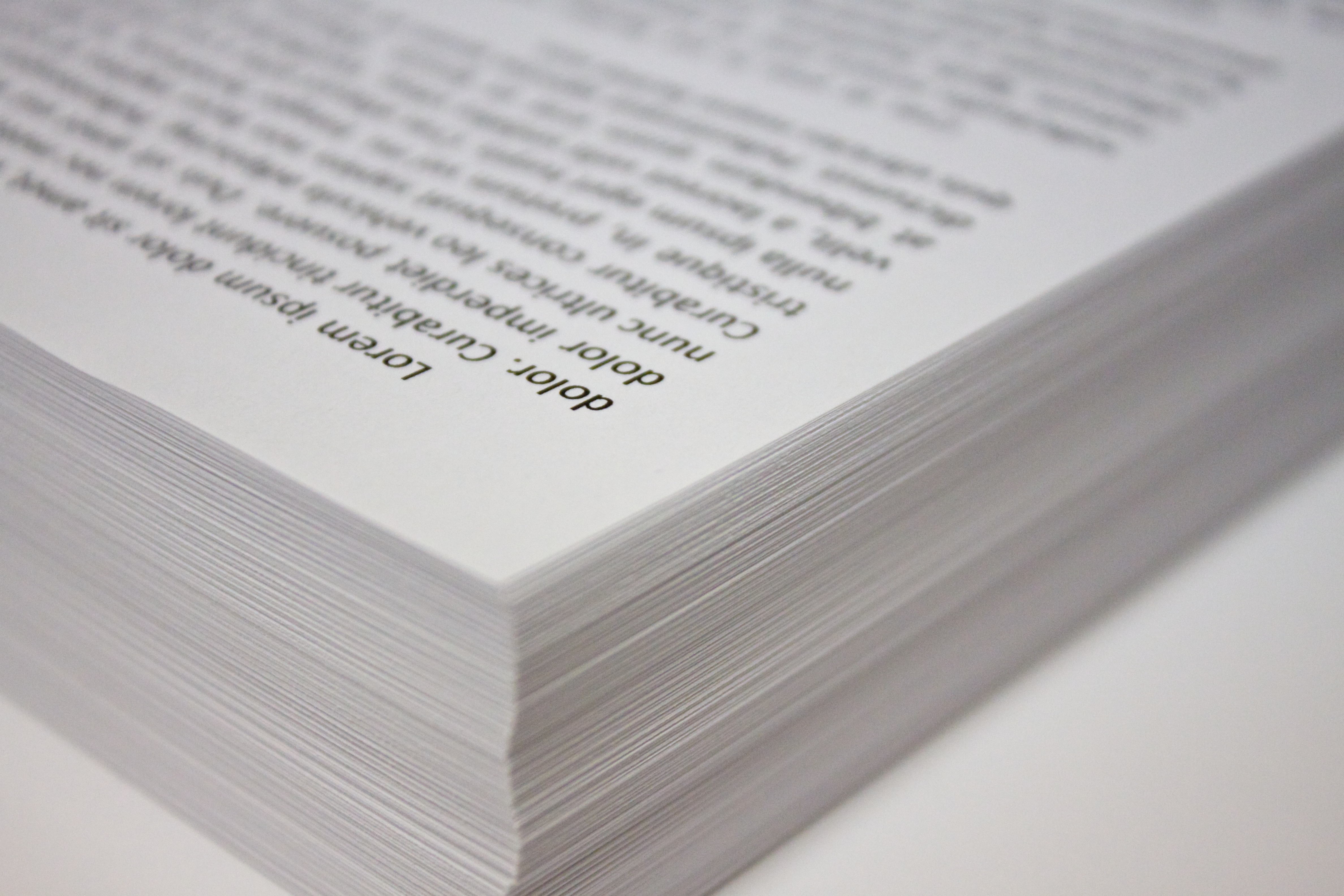
A stack of papers

Too many papers
Find and compare faster
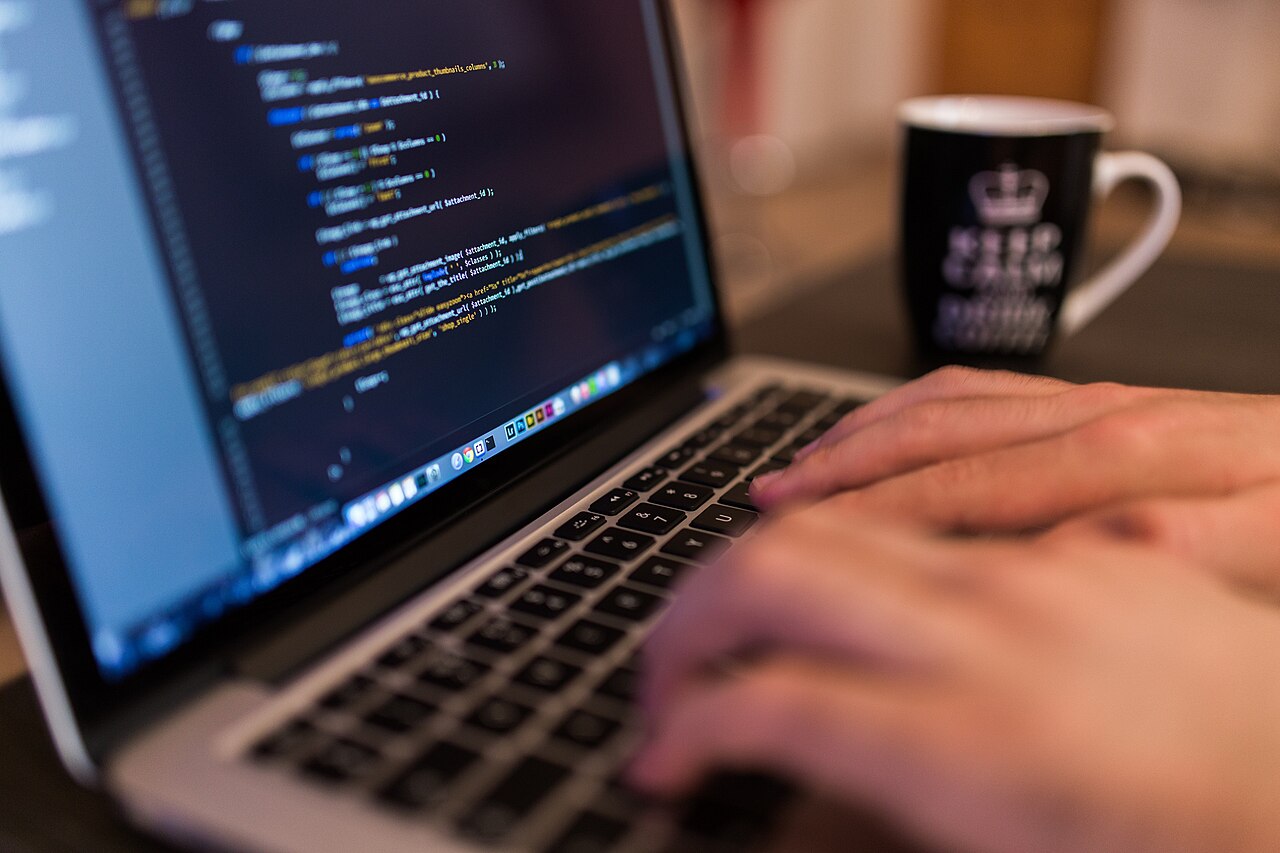
A programmer typing code on a laptop

Implementation friction
Prototype and debug faster

A fictional intelligent assistant

A useful assistant?
Only with human judgement

Image credits: paper Wikimedia Commons (2011); programming photograph Free-Photos from Pixabay (2015).

An honest promise

Traits of AI agents: infinite energy, zero shame and uneven reliability

An AI agent is like a very fast junior collaborator:

  • endless energy,
  • no embarrassment about trying,
  • uneven reliability.

Useful for execution and exploration. Scientific originality and judgement remain my responsibility.

A language model is not an oracle

\[P(\text{token}_t \mid \text{tokens}_{<t})\]

It produces plausible continuations.

Useful? Very often.
True by default? No.
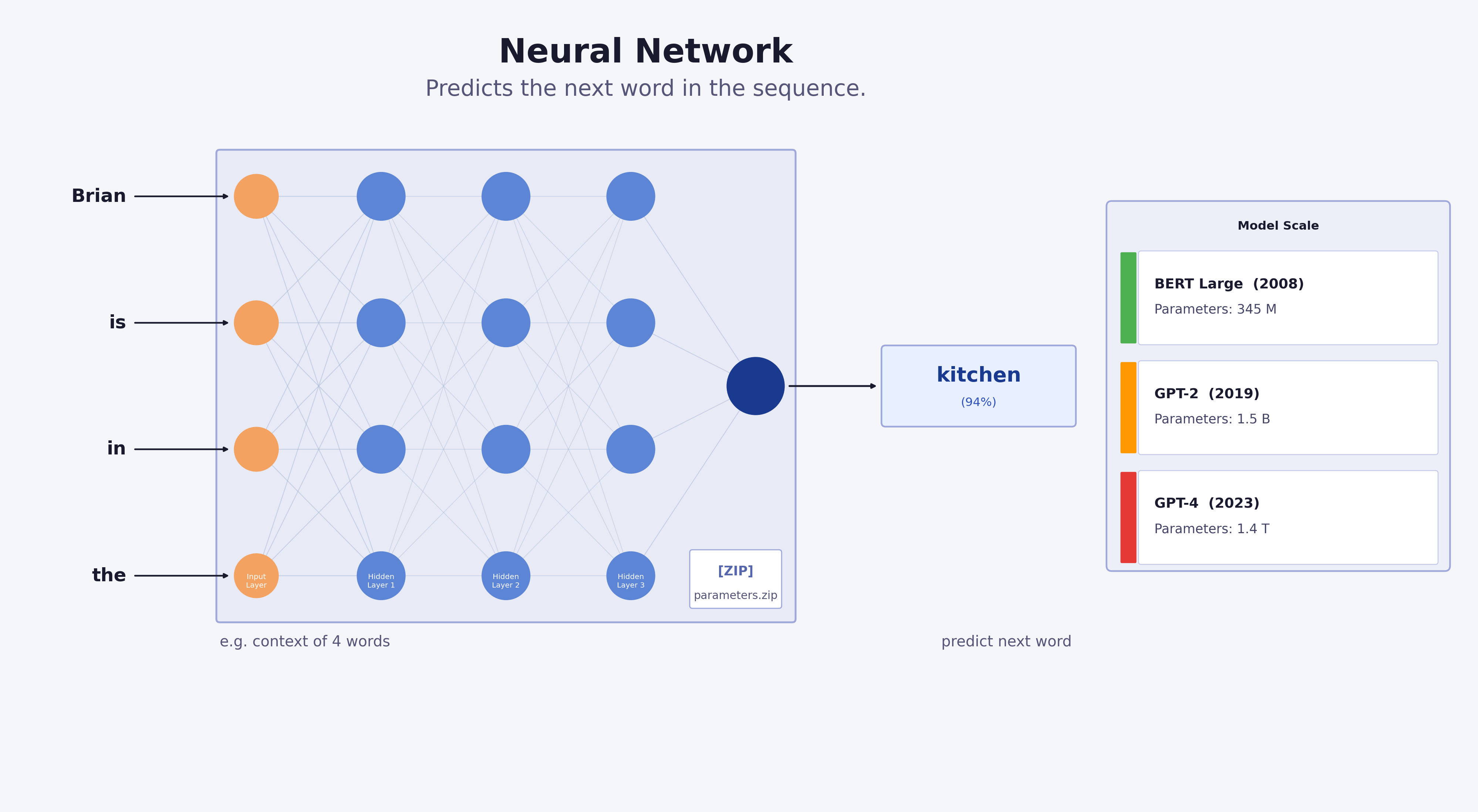
Schematic neural network predicting a token

Hallucination and evaluation discussion: OpenAI (2025).

From chat to AI agent

Chat

Prompt followed by answer

Question -> response

Agent

Agent iterating using tools

Goal -> tools -> actions -> results

What agents can do

PDFLiteraturequery sources
{ }Softwareimplement, test
fxNumericsrun studies
TXTWritingdraft, revise
Your intent
->
Files
papers / code / notes
->
Tools
search / shell / tests
->
Results

My highest-value use is not “write code for me.”
It is: help me reach results I can check sooner.

Tool connections are standardized in part through MCP: Model Context Protocol (2026).

My survey of available tools

Interactive survey prepared for my previous seminar; pricing shown inside is a dated snapshot and should be verified before any decision.

Documents: source-grounded questions

Example: NotebookLM

Upload selected sources, then ask focused questions:

Where do two papers disagree?
Which assumptions define the method?

NotebookLM uses uploaded sources to answer requests: Google NotebookLM Help (2026).
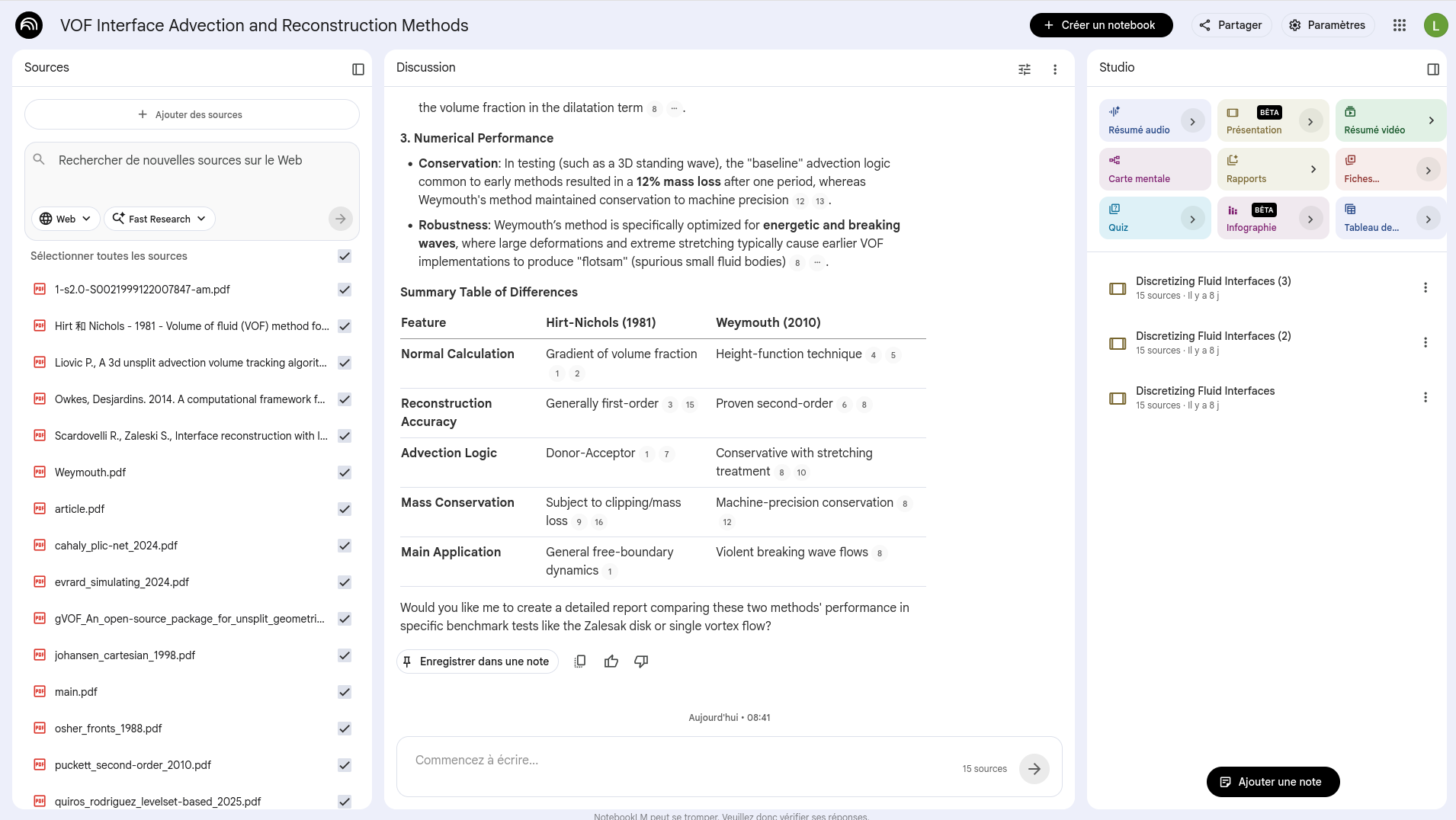
NotebookLM interface using uploaded sources

Code: the loop I use

Clear intent
->
Small case
->
Agent patch
->
Tests
->
Review
->
Iterate

An implementation is cheap. A validated result is valuable.

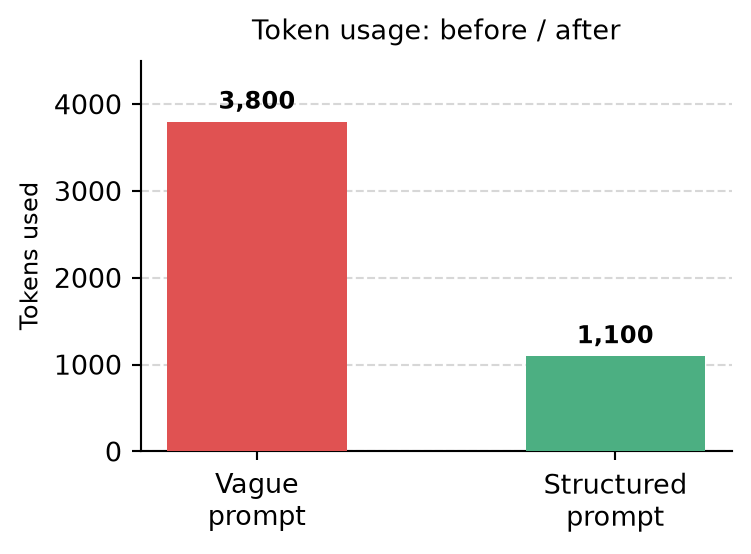
Prompt quality: Objective and Detail

Blurred request

My simulation is unstable.
Make it work.

Checkable request

Diagnose mass drift in the static
droplet test. Preserve the scheme.
Find the first failing invariant.
Run the convergence tests.

The clearer I am about the outcome, the less freedom the model has to invent the problem.

Detailed prompts are worth it

Objectivewhat must change?
Contextwhich files and references?
Constraintswhat must remain invariant?
Testhow is success measured?
Reportwhich results must be returned?

A serious prompt may be dozens or hundreds of lines.

Objective
  Add a manufactured-solution convergence test for <equation/method>.

Context to read first
  Read src/<operator>, test/<nearest existing test>, docs/MATH.md.

Scientific constraints
  The exact solution is ... Evaluate L2 error at refinements [...].

Implementation contract
  Start with a plan. Make the smallest patch. Run <command>.

Final response
  List changed files, commands run, numerical results and uncertainty.

Failure modes and verification

Useful failures

  • Wrong API name → caught by tests
  • Large patch → reduced during review

Dangerous failures

  • Plausible but false derivation
  • Relaxed tolerance hidden as success
1Runs
2Regression
3Invariant
4Convergence
5Scientific meaning

The agent can run checks. I decide whether the result supports a scientific claim.

Command review: keeping control

Example CLI commands

Command Use
/init create project guidance
/clear new independent topic
/compact summarize context
/rewind undo a bad direction
/help discover commands

Session-management commands for an AI agent tool

Command examples originate from my Claude CLI notes; exact commands vary by tool.

Claude Code CLI: what makes it useful

Built-in features

  • MemoryCLAUDE.md loaded at start
  • Skills — reusable instructions (/skill)
  • Hooks — run shell commands on events
  • MCP — connect external tools via a protocol
  • Subagents — delegate subtasks in parallel

The same model, extended by your project context and tools.

Claude Code documentation: Anthropic Docs (2026).

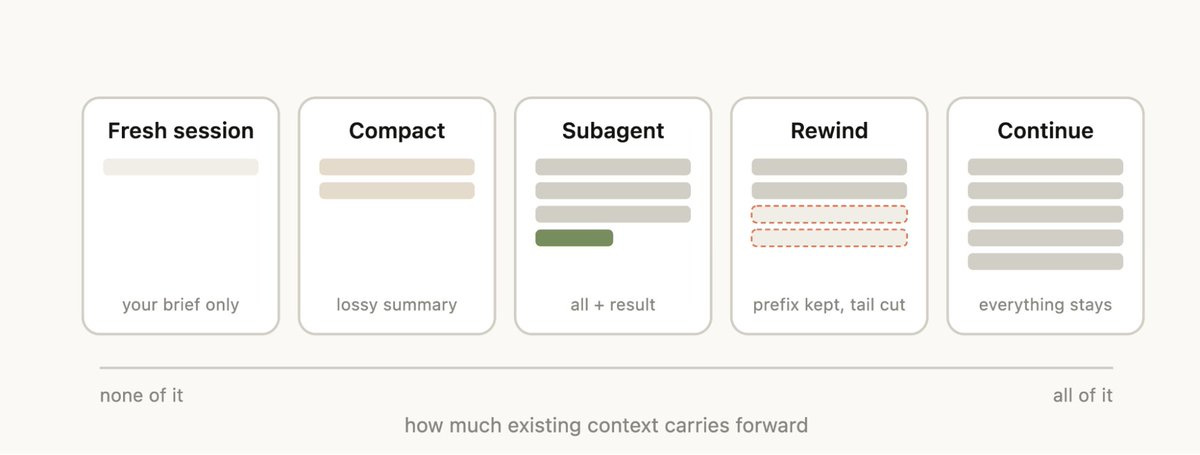
Context is a limited resource

Context window

An agent sees only the material provided or retrieved in the current working context.

Do not make it re-read the entire project for every question.
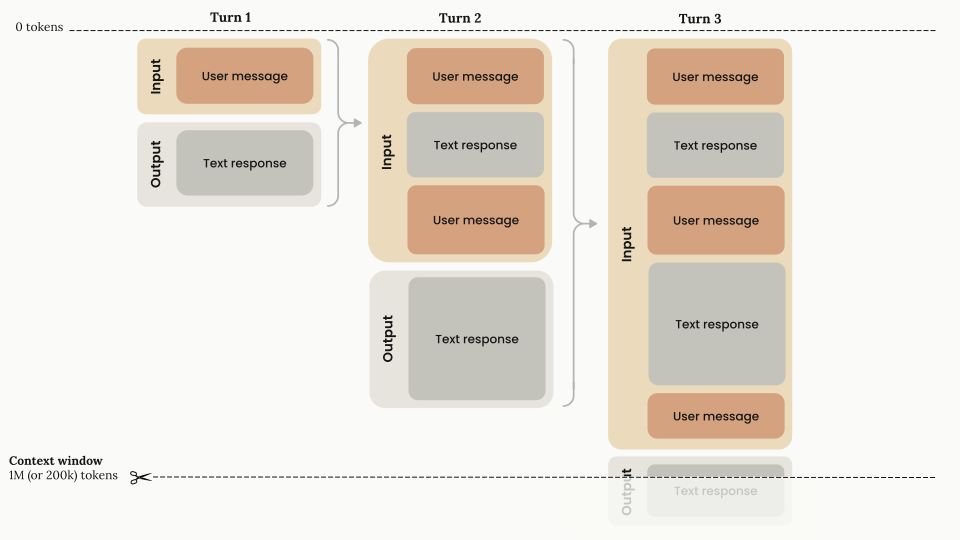
Context window containing only part of project history

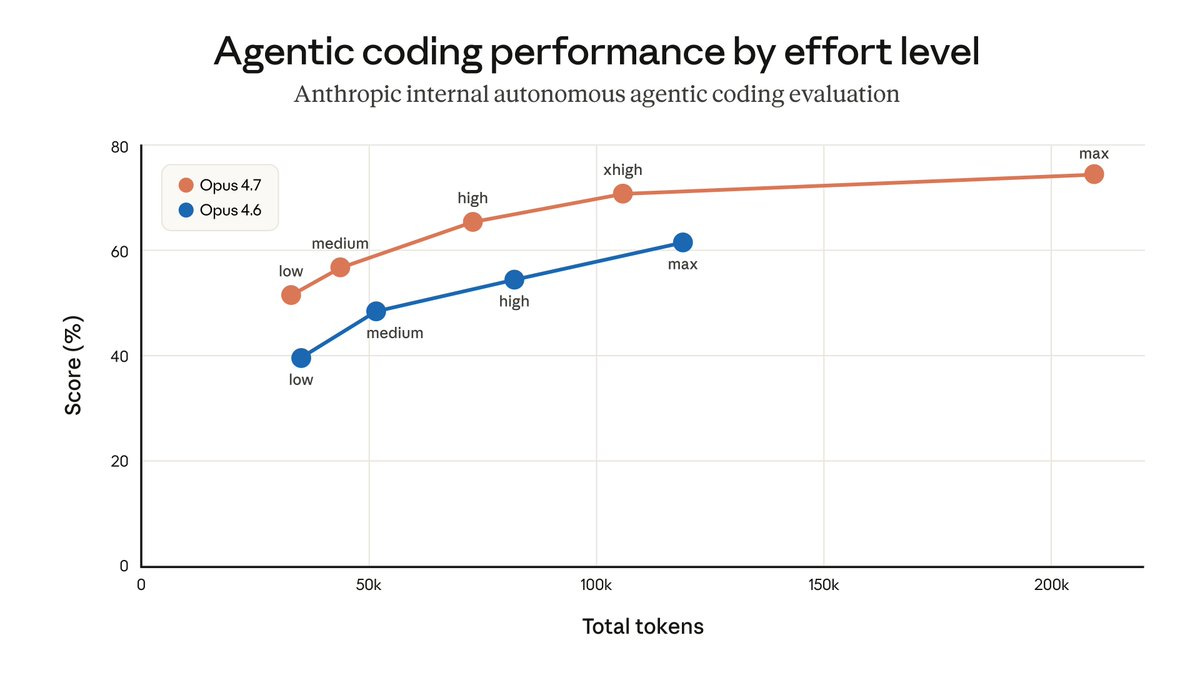
Choose effort for the task

Trade-off between model effort and task complexity

Search and formatting do not require the same reasoning budget as architecture or numerical diagnosis.

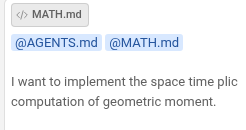
Project memory

Persistent context

AGENTS.md / CLAUDE.md
build, test, conventions

MATH.md
equations and assumptions

SKILL.md
reusable Julia workflow
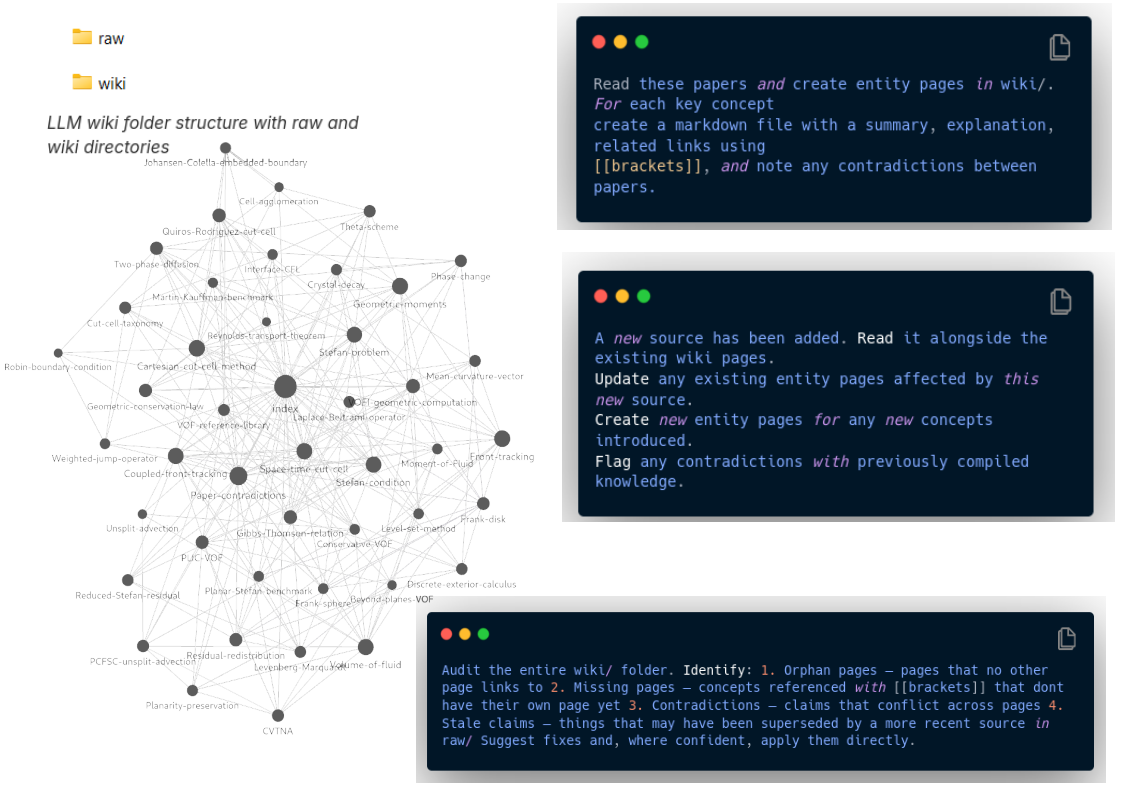
Connected project notes in Obsidian

LLMwiki memory

Files are versioned memory. Tests are executable memory.

AGENTS.md: operating manual for an agent

In CartesianGeometry.jl

integrate(...)
-> select backend
-> compute moments
-> return GeometricMoments

:vofi :voftools :implicitintegration

Validation encoded for the agent

  • Unit tests per backend
  • Explicit-front / level-set consistency
  • Mixture-law verification
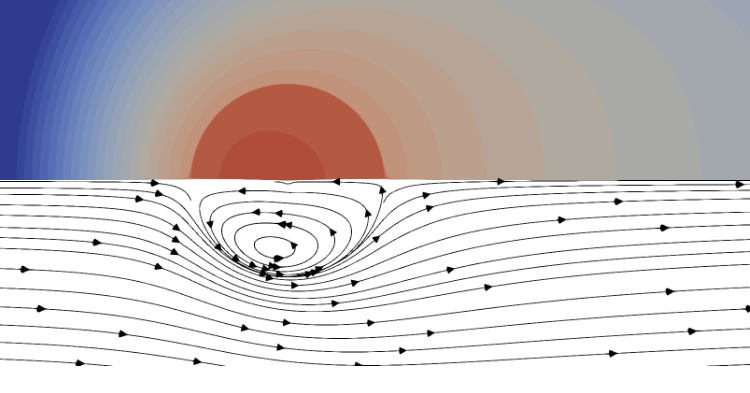
  • Known verification scripts for space-time PLIC

Extracted from CartesianGeometry.jl/AGENTS.md, lines 1–17, 35–55 and 262–271.

MATH.md: scientific context that persists

Cut-cell definition

\[V_C = \int_{C \cap \{\phi \le 0\}} dV\]

\[\mathbf{b}_C = \frac{1}{V_C} \int_{C \cap \{\phi \le 0\}} \mathbf{x}\,dV\]

Why give this to an agent?

  • Wet / dry sign convention is explicit.
  • A cut, full or empty cell is defined.
  • VOF reconstruction constraints are recorded.
  • Generated code can be checked against the method.

Definitions from CartesianGeometry.jl/MATH.md, lines 7–44 and 119–157.

SKILL.md: Julia development rules

Skill metadata

name: julia
description: Julia development
  guidelines for scientific code.

One reusable instruction set, available across Julia tasks.

Instructions given to the agent

  • Use multiple dispatch and type-stable code.
  • Prefer immutable structs and SArray for fixed collections.
  • Add docstrings with signatures and return values.
  • Test edge cases and type stability.
  • Profile with BenchmarkTools.jl before optimizing.

Example Julia skill supplied for this talk; reusable Codex skills are documented in OpenAI (2026).

Example of usage:

3 agents working in parallel on a single project:
Reproduction of benchmark from a pdf paper

  • Read and summarize a PDF paper.
  • Data extraction
  • Generate Julia code for reproduction.

Implementation of the benchmark in our codebase

  • Implement the benchmark in our codebase.
  • Run convergence tests.
  • Compare and iterate.

Implementation and verification of large refactoring

  • Implement large refactoring.
  • Run regression tests.
  • Verify against known results.

Hosted models or local open-weight models?

Hosted US services

OpenAI, Anthropic, Google

Easy to access and powerful; material is processed through a provider service.

European alternative

Mistral AI

I tested Codestral, Devstral, and Mistral Studio.

Work nice for smaller tasks, but not yet a full replacement for hosted services.

Local open-weight model

More control, but:

Devstral local, reduced setup: run on a Mac M3 10 GPUs.

Mistral model and local deployment documentation checked on 27 May 2026: Mistral AI (2026a); Mistral AI (2026b).

Sovereignty and intellectual property

Before sending material

What leaves my machine?
May it be retained or trained on?
Who controls deployment and keys?

A relevant option

Mistral documents that API data is not used for model training and provides self-deployment routes for compatible models.

This does not replace checking project or partner rules.

Mistral privacy and deployment documentation: Mistral AI (2026c); Mistral AI (2026d).

Takeaways

1Clarifythe desired result
2Start smallminimum viable result
3Verifytests to meaning
4Owndata and claims

AI agents do not replace research judgement.
They can free time for it.

Discussion

Where could an agent remove friction in your work?

What tests or checks would make you trust its output?

What data must never leave your control?

Cited documentation

Anthropic Docs. 2026. “Claude Code Overview.” https://docs.anthropic.com/en/docs/agents-and-tools/claude-code/overview.
Free-Photos from Pixabay. 2015. “File:ComputerProgrammer.jpg.” https://commons.wikimedia.org/wiki/File:ComputerProgrammer.jpg.
Google NotebookLM Help. 2026. “Add or Discover New Sources for Your Notebook.” https://support.google.com/notebooklm/answer/16215270.
Mistral AI. 2026a. “Coding.” https://docs.mistral.ai/capabilities/code_generation/.
Mistral AI. 2026b. “Offline / Local: Run Devstral Locally.” https://docs.mistral.ai/mistral-vibe/local.
Mistral AI. 2026c. “Privacy.” https://docs.mistral.ai/admin/security-access/privacy.
Mistral AI. 2026d. “Self-Deployment.” https://docs.mistral.ai/models/deployment/.
Model Context Protocol. 2026. “What Is the Model Context Protocol (MCP)?” https://modelcontextprotocol.io/docs/getting-started/intro.
OpenAI. 2025. “Why Language Models Hallucinate.” September. https://openai.com/index/why-language-models-hallucinate/.
OpenAI. 2026. “Agent Skills (Codex).” https://developers.openai.com/codex/skills.
Wikimedia Commons. 2011. “File:stack of Copy Paper.jpg.” https://commons.wikimedia.org/wiki/File:Stack_of_Copy_Paper.jpg.